


October 13, 2026
By Subash Kafle
Keke Palmer on Motherhood, RSV Prevention & Helping Protect Babies from Day One
Read More
National Minority Quality Forum
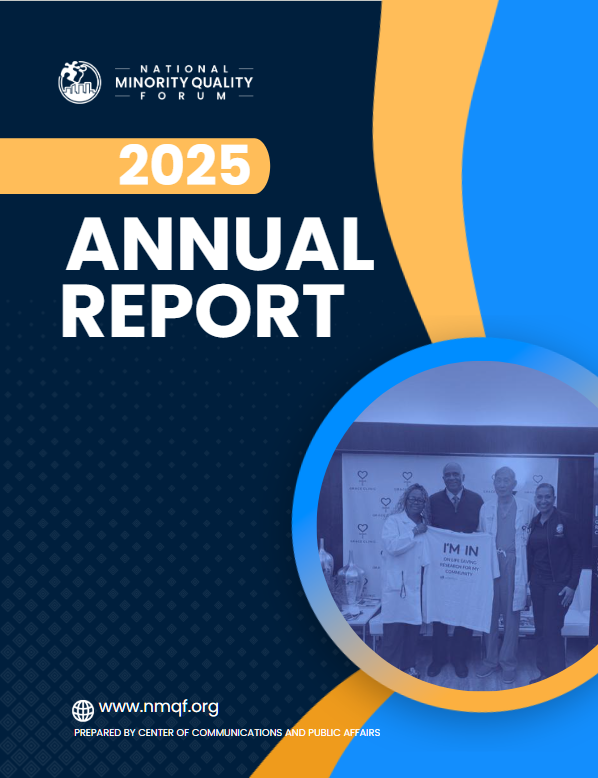
For more than 25 years, the National Minority Quality Forum has worked to ensure that data does more than document disparities. It must help us understand where health systems are failing, identify who is being left behind, and guide solutions that improve and extend lives.
In 2025, we took the next step in that work.
The theme of this year’s National Annual Leadership Summit on Health Disparities—“From Data to Action: Uniting to Advance Evidence-Informed Solutions for Medically Underserved Communities”—captured both the urgency of this moment and the direction of our organization. Evidence is essential, but evidence alone cannot transform health outcomes. Progress requires researchers, clinicians, patients, community leaders, policymakers, and private-sector partners to act together.
Throughout the year, NMQF strengthened the connection between knowledge and implementation. We advanced research designed to detect disease earlier and improve participation in clinical studies. We brought health education, screenings, navigation, and resources directly into communities. We elevated patient and caregiver experience as a source of expertise and translated complex findings into information people can understand and use.
Across our centers and programs, these efforts shared a common purpose: building practical pathways from insight to action.
This report reflects an organization focused not only on identifying what must change, but on developing and expanding models for how that change can occur. Our work is grounded in data, strengthened by community voice, and carried forward through partnerships capable of turning promising ideas into lasting infrastructure.
The challenges remain significant. Shifting policies, declining trust, uneven access to innovation, and persistent gaps in care require sustained cooperation and a willingness to redesign systems around the people they are intended to serve.
We know where the gaps are. We are building the solutions. And together, we are moving from evidence to action.
Sincerely,
Gary A. Puckrein, PhD


October 13, 2026
By Subash Kafle
May 14, 2026
By Victor Mejia Lacayo
May 07, 2026
By Victor Mejia Lacayo

April 17, 2026
By Victor Mejia Lacayo

April 17, 2026
By Victor Mejia Lacayo

April 17, 2026
By Victor Mejia Lacayo