

October 29, 2026
By Adjoa Kyerematen
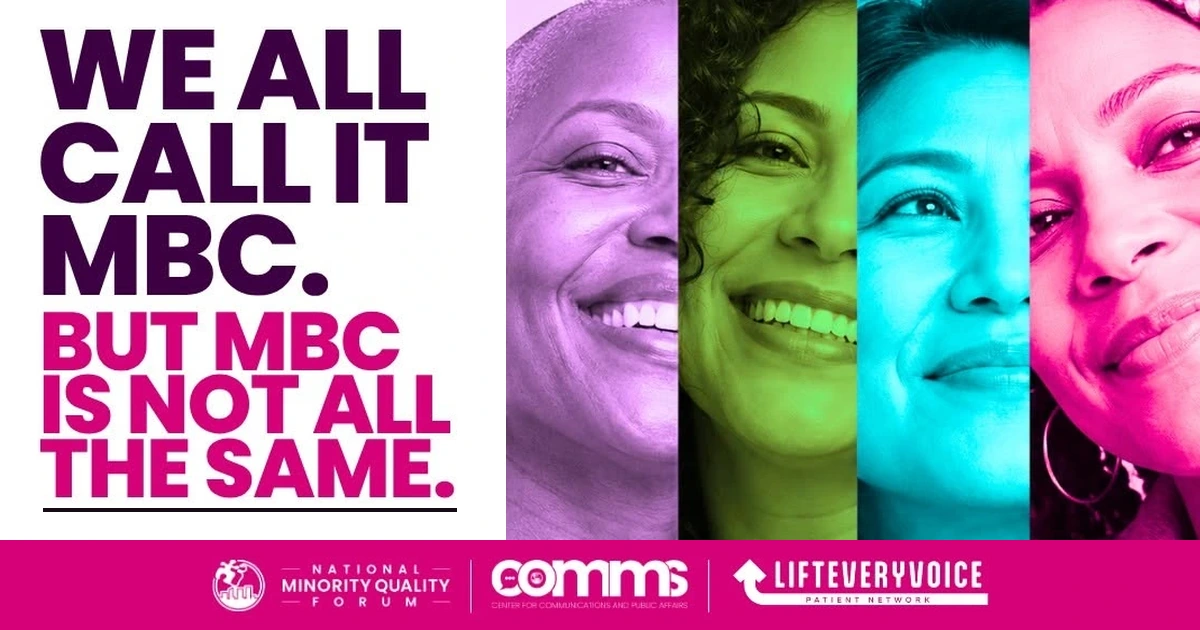
National Minority Quality Forum Reaches 557,000 Through “Not All the Same” mBC Campaign
Read More

WASHINGTON (Nov. 25, 2026) — Today, Gary A. Puckrein, Ph.D., President and CEO of the National Minority Quality Forum (NMQF), issued the following statement in response to the Treasury Department’s proposed rule under the COINS Act, which would restrict U.S. investment in biotechnology companies in China and other countries of concern:
“NMQF supports protecting the nation from genuine biosecurity threats. But the rule never explains why developing civilian medicines is one. It is meant to keep U.S. capital from advancing the military, intelligence, and surveillance capabilities of countries of concern, yet it covers ‘pharmaceutical compounds,’ including vaccines, cell and gene therapies, and monoclonal antibodies, with no stated security rationale. The weapons concern is already addressed by the rules separate provisions on dangerous agents and toxins, on equipment, and on named entities.
“Treasury itself concedes that its restrictions could cause ‘significant public health risks.’ That is the real security risk: the health of the American population. Treasury asks whether pharmaceutical compounds should be narrowed to frontier technologies. Narrowing is not enough, because frontier therapies, such as cell and gene therapies and novel antibodies, offer the most hope to patients with unmet medical need. Pharmaceuticals should be removed from the rule.
“Those risks fall hardest on the patients NMQF serves. Patients across every racial and ethnic minority group have lower five-year cancer survival rates than white Americans, and Black and Hispanic participants are often underrepresented in the trials that support drug approvals. Innovation has been closing the gap. Since 1991, cancer death rates among Black men have fallen by more than half, partly due to more effective treatments. A rule that slows new therapies puts that progress at risk.
“The rule also misreads why American developers look to China. From 2016 to 2025, China’s share of global trials of the most innovative drugs rose from about 5 percent to about 30 percent, while the U.S. share fell from about 45 to 33 percent. Much of the reason is that developing a medicine here is slower and costlier than it needs to be, because every sponsor rebuilds consent language, site contracts, eligibility criteria, and outcome measures from scratch, and
incompatibly, for every study. That fragmentation is a domestic problem, and restricting investment abroad does nothing to fix it. Nor will withdrawal stop a country determined to build weapons. It will only remove American patients, scientists, and standards from the work on new medicines. Meanwhile, the diversity of the U.S. population, which should be our advantage in showing whether therapies work for every patient group, goes unused.
“The rule completely misunderstands our future and the medical needs of a diverse America. It treats participation in the world’s largest pharmaceutical market as a threat, and it would erode the advantages the United States holds in clinical research. For these reasons, NMQF concludes that its pharmaceutical provisions are a danger to the health of the American population.
“NMQF urges Treasury to remove pharmaceutical compounds from proposed § 851.226(r)(4); to assess and publish the rule's effects on patient access, including for racial and ethnic minority patients, before finalizing it; and to pair any restriction with a domestic agenda, working with HHS, FDA, and NIH on a patient-inclusive research commons, shared trial standards, and interoperable data. Winning the competition with China means making it easier to develop new medicines in America, not only harder to finance them abroad.”
About the National Minority Quality Forum
Founded in 1998, National Minority Quality Forum (NMQF) is a United States-based health care research, education, and advocacy organization whose mission is to reduce patient risk and advance health equity by assuring optimal care for all. The mission is to reduce patient risk of hospitalizations, emergency room visits, disabilities, and death, while also promoting high-quality, long lives, particularly for the most vulnerable. NMQF utilizes data and research to
support and mobilize healthcare organizations, leaders, policymakers, and patients in advocating for optimal care for every individual, especially those in minoritized communities. For more information, please visit nmqf.org.


October 29, 2026
By Adjoa Kyerematen

October 02, 2026
By Adjoa Kyerematen
July 23, 2026
By Adjoa Kyerematen
May 20, 2026
By Adjoa Kyerematen

May 08, 2026
By Subash Kafle

May 07, 2026
By Subash Kafle