


October 02, 2026
By Adjoa Kyerematen
National Minority Quality Forum Launches “Protect From Day One” RSV Campaign
Read More
FOR IMMEDIATE RELEASE
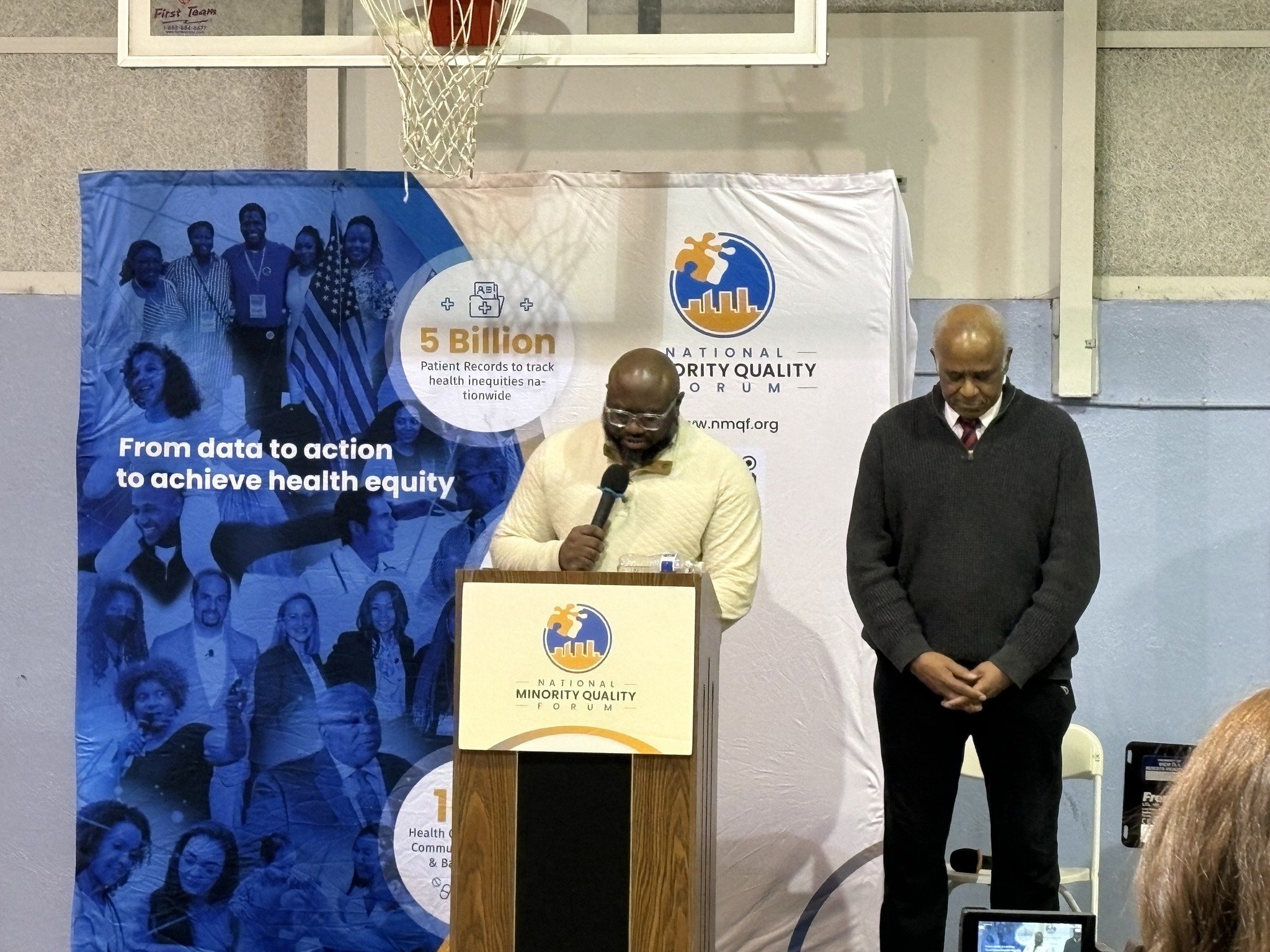
Flint, MI — February 3, 2026 — Over 200 Flint residents gathered Saturday at the Flint Development Center for Flint Forward, a Community Town Hall and Free Mini Clinic hosted by the National Minority Quality Forum (NMQF), underscoring strong community demand for earlier cancer detection, trusted health information, and accessible preventive services in North Flint.
The event followed a milestone earlier in the week, when Delrico J. Loyd, Genesee County Commissioner, and community advocate Arthur Woodson became the first Flint residents enrolled in NMQF’s Community Health Biobank during enrollment at the Life in 3D clinic on Thursday. Their participation marked the launch of a community-centered research effort focused on detecting cancer earlier—often before symptoms appear—and improving follow-up care in communities facing long-standing health inequities.
Saturday’s Town Hall began at 11 a.m. and featured remarks from local and community leaders, including Mayor Sheldon Neeley, Commissioner Loyd, and neighborhood advocates recognized for their leadership and service.
NMQF President and CEO Gary A. Puckrein outlined why Flint was selected for this work, citing environmental exposure concerns, access gaps, and the need for long-term engagement rather than one-time outreach.
Dr. Puckrein also explained NMQF’s Cancer Stage Shifting Initiative in plain language, emphasizing presymptomatic care—identifying cancer risk and disease earlier, before symptoms appear, when treatment options are often broader and outcomes can improve.
“This technology represents a critical shift from reacting to disease to detecting it earlier—often before symptoms appear,” said Gary A. Puckrein, PhD, president and CEO of the National Minority Quality Forum. “We are taking this community into the future, where science leads the way. By pairing presymptomatic cancer detection with community trust, navigation, and follow-up care, we are building a model that helps communities like Flint move from late diagnosis to earlier, more effective intervention.”
During the Town Hall, NMQF and clinical partners explained eligibility and enrollment in the Community Health Biobank, the types of screenings available, and how participants are supported through informed consent, navigation, and follow-up care. Residents were told that all study-related visits and tests are provided at no cost, and that abnormal findings trigger guided next steps rather than leaving patients to navigate care alone.
“I truly believe this initiative will have a profound impact on our community,” said Commissioner Delrico J. Loyd, who represents Genesee County District 1, which includes a large portion of the City of Flint. “Far too many families have felt the heartbreak of cancer, and what we saw at this event is proof of what’s possible when we bring leading science and strong partnerships directly to the people. Early testing and early detection save lives, and we’re committed to making sure Flint and Genesee County is part of that progress.”
“Those who live here in the city of Flint know what it means to band together and help our neighbors, and that’s what this partnership does,” Mayor Sheldon Neeley said. “It helps build the capacity to grow our ability to address the health needs in this segment of our community, improving the quality of life for residents today and strengthening the health of future generations.”
“We are here to help conduct cancer research and early detection to ensure no one is diagnosed too late, due to lack of access or awareness,” Dr. Denika Dalton, DNP-C, nurse practitioner and Founder of Life in 3D Clinic said. “Early detection saves lives and improves longevity and quality of life. When we catch disease sooner, we have more treatment options available, and more effective options, leading to better health outcomes, more time with family, and more time and ability to thrive and pursue our life dreams. We are committed to serve our community, and help them overcome obstacles to health, wellness and prosperity.”
“We are committed to doing everything possible to ensure that people who participate are supported every step of the way—from getting into a doctor’s office to receiving timely follow-up care,” said Dr. Rockefeller Oteng, MD, FACEP, FGCS. “Our partners at the Genesys Hurley Cancer Institute are excited about this technology and fully prepared to act if a cancer signal is detected. We have a clear pathway in place to guide patients through the entire process, ensuring they are seen, supported, and cared for without delay.”
The Town Hall transitioned at noon into a Free Mini Clinic and Health Fair, where residents accessed health screenings, vaccines while supplies lasted, health education, water distribution, and community support services. A vaccine workshop was held during the afternoon, and NMQF staff and partners continued enrollment conversations with residents interested in participating in the Community Health Biobank.
Arthur Woodson, whose advocacy helped bring NMQF’s work to the attention of local leaders, said the effort represents a critical opportunity for Flint residents. “We now have the ability to look years ahead,” Woodson said. “That gives people here access to innovative technology that isn’t available everywhere, and it gives families a better chance.”
NMQF’s Flint work is designed to support communities that have borne disproportionate environmental and health burdens by building trust, expanding access, and generating better evidence to inform prevention and care. Advances in medical technology now allow a single blood test to screen for signals associated with dozens of cancers, often before symptoms appear—a shift that NMQF leaders say must be studied and implemented responsibly in real-world community settings.
“We want Flint to become one of the places in the country where we build new science around environmental exposure and early detection,” Puckrein said. “This is about bringing good science, technology, and long-term investment to help transform community health outcomes. This is not a one-day effort—this is a commitment.”
More information about NMQF’s work, the Cancer Stage Shifting Initiative, and the Community Health Biobank is available at www.shiftcancer.org.
###


October 02, 2026
By Adjoa Kyerematen
July 23, 2026
By Adjoa Kyerematen

May 20, 2026
By Adjoa Kyerematen

May 08, 2026
By Subash Kafle

May 07, 2026
By Subash Kafle
April 28, 2026
By Victor Mejia Lacayo